

Four kinds of water heater, four different answers
Most homeowners arrive at this decision once every ten years or so, which is not often enough to develop an opinion. Here’s the honest shape of each option, with links to the detail.
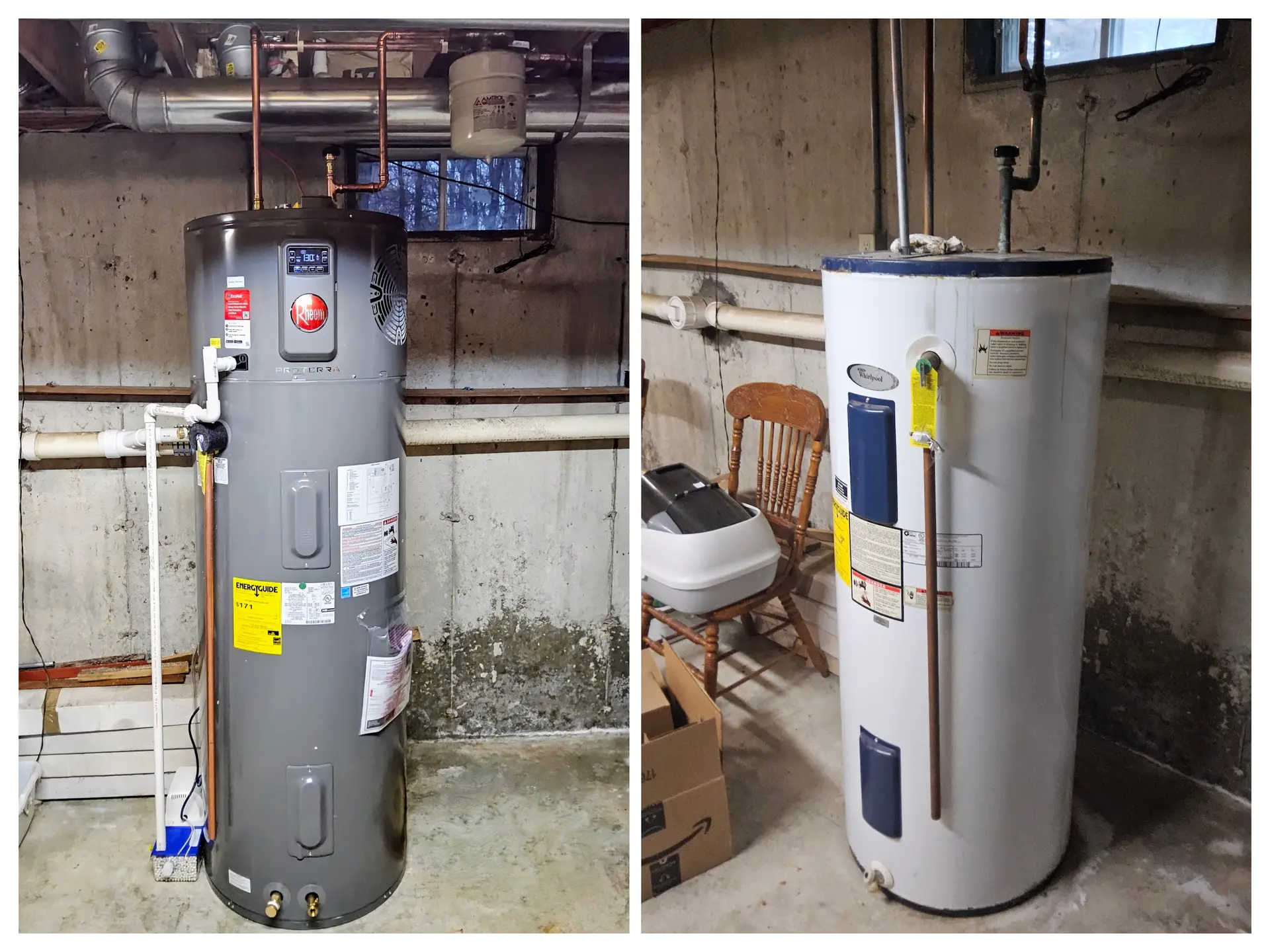
Water Heater Services · Middlesex County
No More Cold Showers
A water heater rarely fails politely. It goes on a Sunday morning with the in-laws upstairs, or it quietly floods a finished basement while you’re at work. Jeneral Plumbing handles water heater repair, replacement, and new installation across Westford and the surrounding Middlesex County towns — gas, electric, hybrid heat pump, and tankless. We fix the cause, not just the symptoms, and we tell you honestly when a repair makes more sense than a replacement. MA Master Plumber #9628831-PL-M. Emergency service is available 24/7, with availability confirmed by phone. A $599 emergency callout fee applies to off-hours, holiday, and Sunday dispatch.
Clear options. Proper sizing. Professional installation.
We diagnose the actual cause and show you both numbers. A $600 repair on a twelve-year-old tank is often money spent twice — and we’ll say so before you spend it.
Gas, electric, hybrid heat pump, and tankless — sized and compared with real Massachusetts operating costs rather than brochure numbers.
A failed tank doesn’t wait for Monday. Call (978) 392-7789 to confirm availability; if you smell gas, leave the building and call the utility first from a safe location. A $599 emergency callout fee applies to off-hours, holiday, and Sunday dispatch.
Most homeowners arrive at this decision once every ten years or so, which is not often enough to develop an opinion. Here’s the honest shape of each option, with links to the detail.
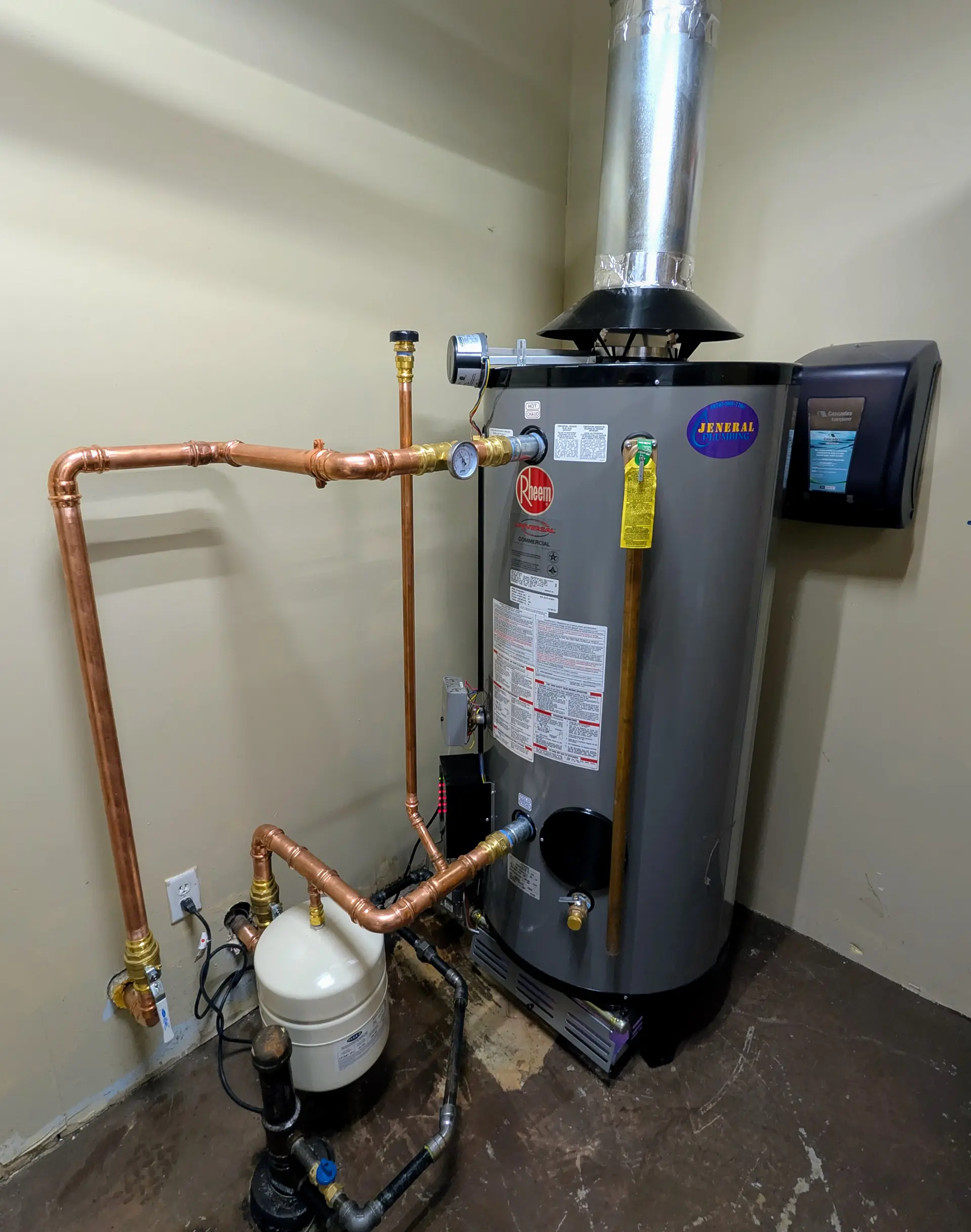
The most common water heater in Massachusetts. A burner heats a 40 to 80 gallon tank, and the system cycles to hold temperature. Recovery is fast, equipment cost is the lowest of the four, and a chimney-vented model keeps working during a power outage.
The catch is usually the venting. If your chimney needs a liner, that single item can cost more than the water heater. It’s the most common surprise in a gas replacement, and it’s worth understanding before you get a quote.
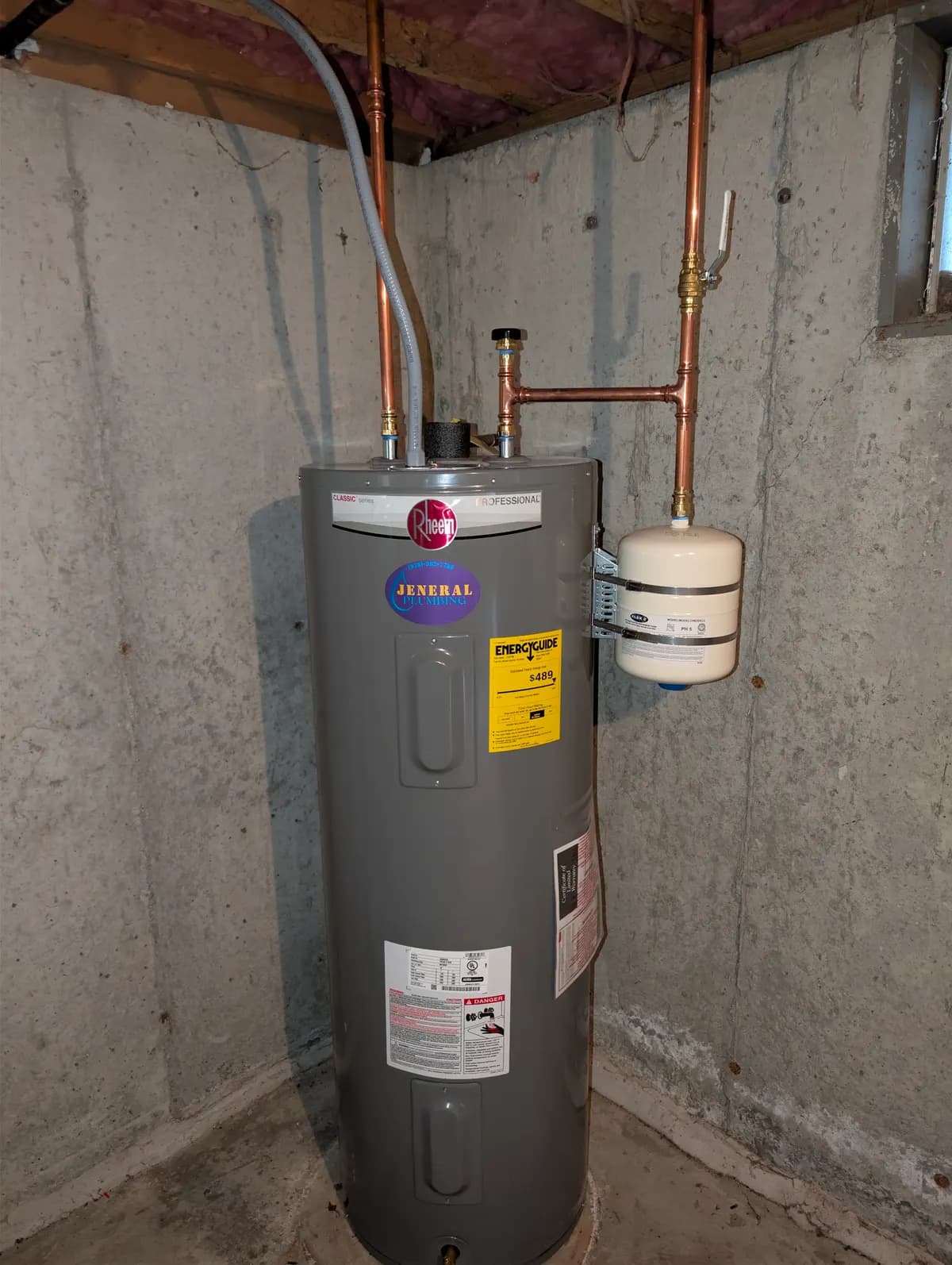
Simple, quiet, no combustion, no venting. It fits where safe gas venting would be difficult, and any technician can service it.
It’s also, by a wide margin, the most expensive water heater to operate in this state. Massachusetts electricity rates are among the highest in the country, and a resistance element converts power to heat at roughly one to one. If you have one of these, the numbers on electric resistance and heat pump water heater costs are worth reading.
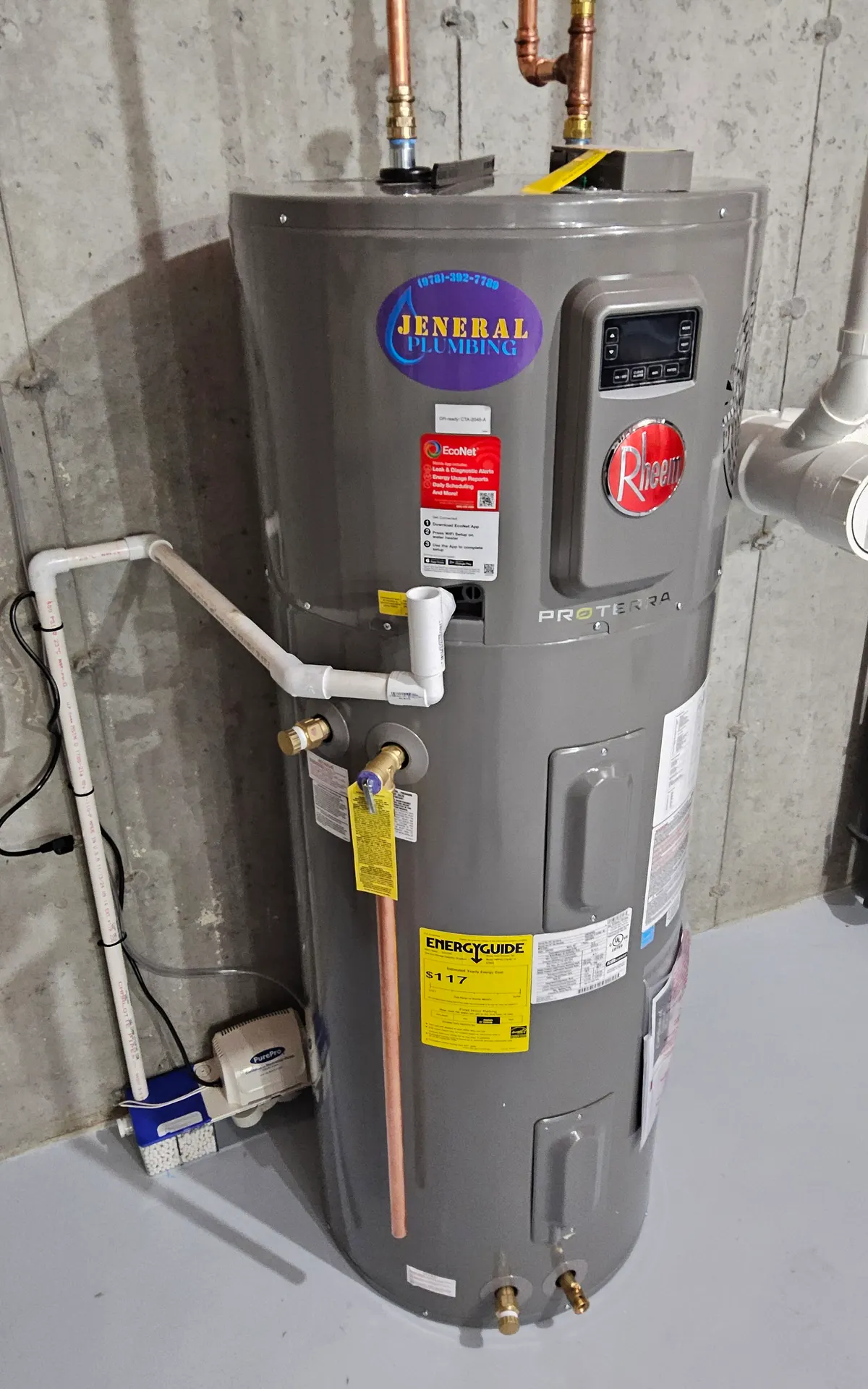
Instead of making heat, it moves heat — pulling warmth from the surrounding air the way a refrigerator does in reverse. It uses roughly a third of the electricity a resistance tank does.
It needs air volume, a condensate drain, and a basement or utility room that suits it. When those conditions are met, it’s the strongest financial case of the four, and it’s the only category currently earning Mass Save incentives.
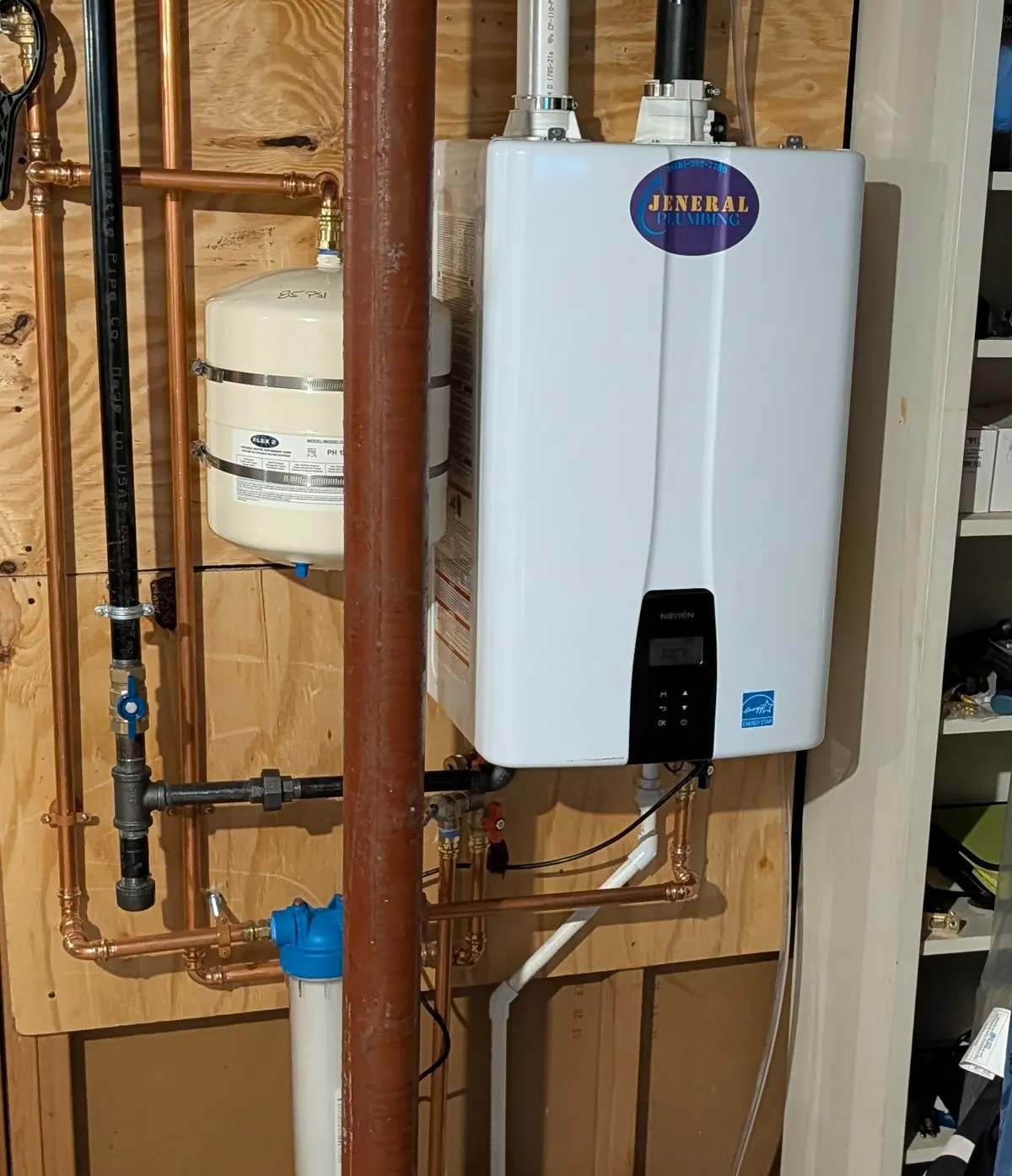
Heats water as it flows, so hot water is continuous rather than stored. It frees the floor space a tank occupies and lasts substantially longer than a storage tank.
It is not primarily an energy-savings play, whatever the advertising says. The case for tankless is continuous supply, space, and service life — and we’d rather tell you that up front than after you’ve written the check.
This summary keeps the buying decision in one place: installed price, expected service life, and directional operating cost. The technology pages linked above explain the conditions behind each row; this hub stays focused on the repair-or-replace decision.
As of August 2026, the Mass Save heat pump water heater incentive page lists a $750 per-unit discount for qualifying equipment and customers. Confirm the current amount, equipment requirements, and customer eligibility with Mass Save before purchasing equipment.
| Water heater type | Installed cost | Typical service life | Approximate annual operating cost |
|---|---|---|---|
| Electric resistance tank | from $2,300 | 8–12 years | $1,144 |
| Gas storage tank | $2,900 – $6,500 | 8–12 years | $441 |
| Hybrid heat pump water heater | up to $7,800 before the $750 Mass Save discount (as of August 2026) | 8–12 years | $390 |
| Condensing tankless | $8,500 – $11,000+ | 20+ years with regular descaling | $283 |
Operating-cost figures are directional comparisons for a household of three or four using the DOE test basis and current Massachusetts energy rates; actual use depends on demand, settings, equipment, and utility rates.
Rough annual operating cost for a household of three or four, using the DOE test basis at current Massachusetts energy rates. These are directional figures for comparison — each technology page shows the full working.
Two things surprise people. Gas still runs far cheaper than electric resistance — roughly a third the cost. If you have gas service and an electric tank, that gap is worth a conversation. And a hybrid heat pump now costs slightly less to run than a standard gas tank. Massachusetts electricity is expensive, but a heat pump uses so little of it that the old assumption no longer holds.
Operating cost is only one input. Installation cost, venting conditions, electrical capacity, recovery speed, and how long you plan to stay in the house all matter. That’s what an assessment is for.
| Equipment | Approximate annual operating cost |
|---|---|
| Electric resistance tank | $1,144 |
| Standard-efficiency gas storage tank | $441 |
| Hybrid heat pump water heater | $390 |
| Condensing tankless (gas) | $283 |
Our installed pricing
| Equipment | Installed cost |
|---|---|
| Standard electric resistance tank | from $2,300 |
| Gas storage tank | $2,900 – $6,500 |
| Hybrid heat pump water heater | up to $7,800 (before the $750 Mass Save discount, as of August 2026; see Rebates and incentives below) |
| Condensing tankless (gas) | $8,500 – $11,000+ |
Where a project lands depends on venting, gas, condensate, and electrical conditions — we quote after seeing the installation.
We compare hot-water demand, fuel and electrical service, venting, installation conditions, and operating cost before recommending gas, electric, heat pump, or tankless.
Expect 8 to 12 years from a storage tank, gas or electric. A tankless unit commonly reaches 20 years or more with proper maintenance.
Water chemistry is the largest single variable. Hard water shortens tank life and drives up tankless descaling frequency, which is why we test rather than guess.
The anode rod matters more than most homeowners realize. It’s a sacrificial metal rod that corrodes so the tank lining doesn’t, and inspecting or replacing it at the right intervals is one of the few genuinely high-return maintenance items on a storage water heater.
Manufacturer warranties tend to run six years on tank and parts, with longer terms available. Worth knowing: labor is not covered by any major manufacturer’s standard residential warranty, and extended coverage usually has to be purchased at the time of installation rather than added later.
Some of these mean a repair. Some mean the clock is running. Knowing which is which saves money.
No hot water at all: on a gas unit this often points to the pilot, igniter, thermocouple, or gas control. On electric, usually a heating element or thermostat. Frequently repairable. Water that never gets hot enough, or runs out fast: could be a failed element, a broken dip tube, a thermostat problem, or a tank that’s undersized for how the household has changed since it was installed.
Rumbling or popping: sediment has built up on the tank bottom, and water is boiling through the layer. The tank is working harder than it should, and on an older unit this is often an early warning. Rusty or discolored hot water: sometimes a depleted anode rod, sometimes the tank lining itself. Worth diagnosing quickly — the difference between those two is the difference between a service call and a replacement.
Water around the base: where it’s coming from decides everything. Water at a drain valve, fitting, relief valve, or nearby pipe is often repairable. Water escaping through the tank body means replacement — steel tanks don’t get patched. Low hot water pressure may be scale, a partially closed valve, or an issue elsewhere in the plumbing rather than the heater itself.
If you smell gas, leave the area immediately. Don’t operate switches or create a flame. Call the gas utility or emergency services from a safe location before arranging plumbing service.
We diagnose the actual cause and explain both paths. Timing depends on equipment availability and job scope, and we’ll be straight with you about both.
Emergency water heater service is available 24/7, with availability confirmed by phone. Off-hours, holiday, and Sunday dispatch carries a $599 emergency callout fee — non-refundable, non-negotiable, collected prior to dispatch, covering the dispatch only, never applied to repair work. If you smell gas, leave the building and contact the gas utility from a safe location first.
Water heater repair starts by identifying the failed part and checking whether the tank or heat exchanger is still serviceable. Jeneral Plumbing evaluates the symptom, the accessible controls and connections, equipment age, and the conditions around the installation before recommending repair or replacement.
For regular-hours diagnosis, there is an $80 dispatch fee — the cost of the visit, waived when you hire us for the work. That regular-hours waiver does not apply to emergency dispatch: off-hours, holiday, and Sunday dispatch carries a $599 emergency callout fee — non-refundable, non-negotiable, collected prior to dispatch, covering the dispatch only, never applied to repair work.
A leaking fitting, valve, or nearby pipe may be repairable; a storage tank leaking through its body is not. If water is reaching electrical equipment, a ceiling, or a finished area, shut off the heater’s water supply and energy source only when you can do so safely, then call (978) 392-7789 to confirm the next step.
Same-day replacement can be possible when the right equipment is available, the existing fuel or electrical setup is suitable, and the job does not uncover added venting, chimney, gas-piping, condensate, or circuit work. It is never promised before the installation conditions and current schedule are confirmed.
Jeneral Plumbing is owner-operated, so the person assessing the failure also has to plan the permitted scope, obtain the equipment, complete the installation, commission it, and document the work. That creates continuity, but it also means availability is real rather than unlimited.
When replacement cannot be completed that day, we explain what is holding it up and what the next viable appointment requires. If a safe temporary step exists within the plumbing scope, we will discuss it; we will not leave unsafe equipment operating to create the appearance of speed.
Tank gallons is the number everyone asks about and the wrong one to lead with. First-hour rating — how much hot water the unit can actually deliver during your busiest hour — is what determines whether anyone gets a cold shower. A 40 gallon tank with a strong burner can outperform a 50 gallon tank with a weak one on a school-morning schedule.
We size from peak simultaneous demand, recovery needs, fixture count, soaking tubs, and incoming water temperature. That last one matters more here than most calculators assume: groundwater entering a home in Westford or Groton during February is cold enough to meaningfully change the math.
Oversizing costs money in equipment and standby loss. Undersizing produces exactly the complaint you replaced the heater to solve.
As of August 2026, qualifying heat pump water heaters may receive a $750 per-unit discount through the current Mass Save heat pump water heater program. Program rules, equipment requirements, customer eligibility, and amounts can change — confirm the current offer with Mass Save before purchasing equipment.
Two things worth knowing as you plan. Incentives currently favor electric heat pump equipment — fossil-fuel water heating has moved outside the rebate structure entirely. And the federal tax credit picture has changed for 2026: plenty of pages still describe credits that are no longer available, so check the current program terms rather than an article.
Ask us what rebate documentation Jeneral Plumbing can provide and which forms you or the program administrator need to complete. We can explain the plumbing scope and the qualifying equipment. Final incentive approval always belongs to the program administrator.
Financing is available up to $250,000, with terms to 12 years and 0% interest options. We also offer senior and church community discounts, with funding typically in one to three days.
A water heater replacement is not two water connections and a handshake. Depending on the equipment, the work involves verifying gas supply and shutoff arrangement or electrical circuit and breaker capacity, vent system and draft or blower operation, combustion air provisions, temperature-and-pressure relief valve discharge, thermal expansion control where required, drain pan and drainage conditions, and safe service clearances.
The system gets filled and purged before firing, leak-checked, commissioned, and explained to you before we leave. Permits and code compliance are part of the job, not an upsell. So is registering the equipment for warranty.
Jeneral Plumbing is owner-operated by a Licensed Master Plumber (MA #9628831-PL-M) with more than twenty years across commercial, residential, and industrial work, including seven years with a gas utility — Navien Service Specialist certified and factory trained by Navien, Rinnai, Noritz, Lochinvar, and Weil-McLain. That matters when the question involves combustion, venting, or a chimney shared with a boiler.
Local housing stock runs from older homes with masonry chimneys to tight modern renovations with complicated mechanical rooms. That range is exactly why an on-site assessment beats a phone quote.
Jeneral Plumbing is a family-owned and operated company serving 23 towns across Middlesex and Essex County. We approach every job through Whole Home Health — treating plumbing, heating, and water quality as one connected system rather than a list of isolated repairs.
Start with our Westford water heater repair and replacement guide. Jeneral Plumbing also handles water heater service for homeowners in Chelmsford, Acton, Littleton, Groton, Carlisle, Tyngsborough, and Dunstable.
Upfront pricing, no hidden fees. Licensed, certified, insured. 5.0 on Google across 100 reviews.
For regular-hours visits, Jeneral Plumbing charges an $80 dispatch fee — the cost of the visit, waived when you hire us for the work. Service Plan members receive a waived dispatch fee as a separate benefit on qualifying regular-hours visits. Off-hours, holiday, and Sunday dispatch carries a $599 emergency callout fee — non-refundable, non-negotiable, collected prior to dispatch, covering the dispatch only, never applied to repair work.
Call (978) 392-7789 or schedule online below. Email office@jeneral-plumbing.com.
Jeneral Plumbing · 5 Westford Hills Rd, Unit 5119, Westford, MA 01886 · (978) 392-7789 · office@jeneral-plumbing.com
Mon–Fri 7:00 AM – 5:00 PM · Sat 8:00 AM – 3:30 PM · Sun Closed · Emergency 24/7
Family-owned and operated. Serving Middlesex & Essex County.
Schedule online or call to arrange an on-site water heater assessment.
Jeneral Plumbing serves Westford and nearby Massachusetts communities with water-heater assessment, installation, replacement, repair, and maintenance. Schedule online or call to discuss your hot-water needs.
The right water-heater decision starts with the fault and installation conditions—not a blanket age rule or an “endless hot water” promise.
Read Article HeatingLearn what to observe, what not to adjust, and which heating or hot-water symptoms should be evaluated by a qualified professional.
Read Article